Recovering from early childhood trauma
It wasn’t until I started going to group therapy that I realized my behavior is partly shaped by my past experiences. At the time, I was in a toxic relationship and felt like… a slut.
I felt so dirty and used, so humiliated, and so far removed from who I thought I was, that I wondered if my life would continue to be a series of traumatic experiences from now on. In fact, it felt like I had brought it all on myself.
It wasn’t until I was in the group that I realized my current behavior was, in part, shaped by unresolved pain from my past. For the first time, I heard about trauma, neglect, and the consequences of sexual abuse. For the first time, I heard about early childhood trauma.
What is early childhood trauma?
Early childhood trauma refers to traumatic events or a prolonged period of insecurity during early childhood.
Early childhood trauma takes many forms. Some examples of early childhood trauma include:
- Unwanted pregnancy
- Chronic malnutrition in the womb
- Birth trauma during or immediately after childbirth
- Emotional, mental, or physical abuse
- Sexual, emotional, physical, or mental abuse
- Neglect (everything you’ve had too much or too little of)
- Parents with an addiction
- (Emotionally) absent parents
- Financial problems
- Health issues
- No safe or stable housing
- Insecure attachment
Impact on your childhood and adult life
Unfortunately, the list goes on and on. And the consequences, both during childhood and in adulthood, are incredibly far-reaching and varied. It’s not surprising that you’d want to process childhood trauma later in life. Consider:
- Feeling unwanted, unseen, or unheard
- Consistently feeling an excessive sense of responsibility
- Not knowing or setting healthy boundaries
- Not feeling safe within yourself or around others
- Not being in touch with your own emotions
- Always there for others, even when they aren’t there for you
- Always on the go and having trouble relaxing
- Living with a sense of scarcity rather than abundance and security
- Experiencing a lot of anxiety, for example, about not doing well or about what others think of you
Coping with childhood trauma in later life
If you recognize any of this in your daily life, it can be quite painful. To support you in your healing process, I’ve created this workshop: How Do I Heal from Early Childhood Trauma and Adolescent Trauma?
In this workshop, I’ll take you back to your childhood, help you discover how that period has shaped your life today, and provide you with practical tools in every session to help you live a healthier and more fulfilling life.
Tips for recovering from complex developmental trauma
Here are a few helpful tips from the training to help you start healing from your childhood or developmental trauma right away:
- Do you recognize unhealthy patterns, for example in your relationships? Do you have trouble setting boundaries? Do you have a hard time handling criticism? Do you find it difficult to be alone? Do you have trouble feeling at ease around people? Do you find it difficult to talk about your feelings or understand what’s going on inside you? These are all signs that you may be dealing with early childhood trauma. If you recognize these patterns in your life today, this is a sign that you should discuss them with a therapist or coach.
- Don’t avoid pain anymore. We don’t want to feel miserable, so we keep ourselves incredibly busy with daily life just to avoid feeling those old, painful experiences. But here’s the thing: that doesn’t help you. No matter how busy you are, if someone makes a hurtful comment, you instantly revert to that little child who feels rejected. Or when you’re faced with a difficult decision, you really don’t know what “the right” choice is. Our old pains and fears are present in our lives now, and as long as we don’t pay attention to them, they tend to pop up unexpectedly and often with extra intensity.
- Accept that you have experienced early childhood trauma. Unfortunately, an incredible number of people have to deal with this; that’s just the way it is. When you accept that this is also true in your life, it doesn’t mean you don’t have or didn’t have loving parents. It simply means that your parents didn’t or couldn’t do everything you needed for your growth and safety. This now requires your full attention if you want to heal from these traumatic and unsafe experiences.
At Discover Your Holy Grail, we do everything we can to support you if you want to heal from painful experiences from your childhood. Check out our online course: How Do I Heal from Early Childhood Trauma and Childhood Trauma? is right for you. In the podcast, you can learn much more about early childhood trauma.
Does this article appeal to you? You might also want to check out the books by Discover Your Holy Grail. Are you curious about what we organize? Then sign up for one of our events.
My name is Rianne van Kuil, author of Discover Your Holy Grail – Your Hero’s Journey from Trauma to Healing, and a trauma and healing expert. I believe that complete healing from trauma is possible, and I guide people on that journey.
Photo: iStock
Other articles
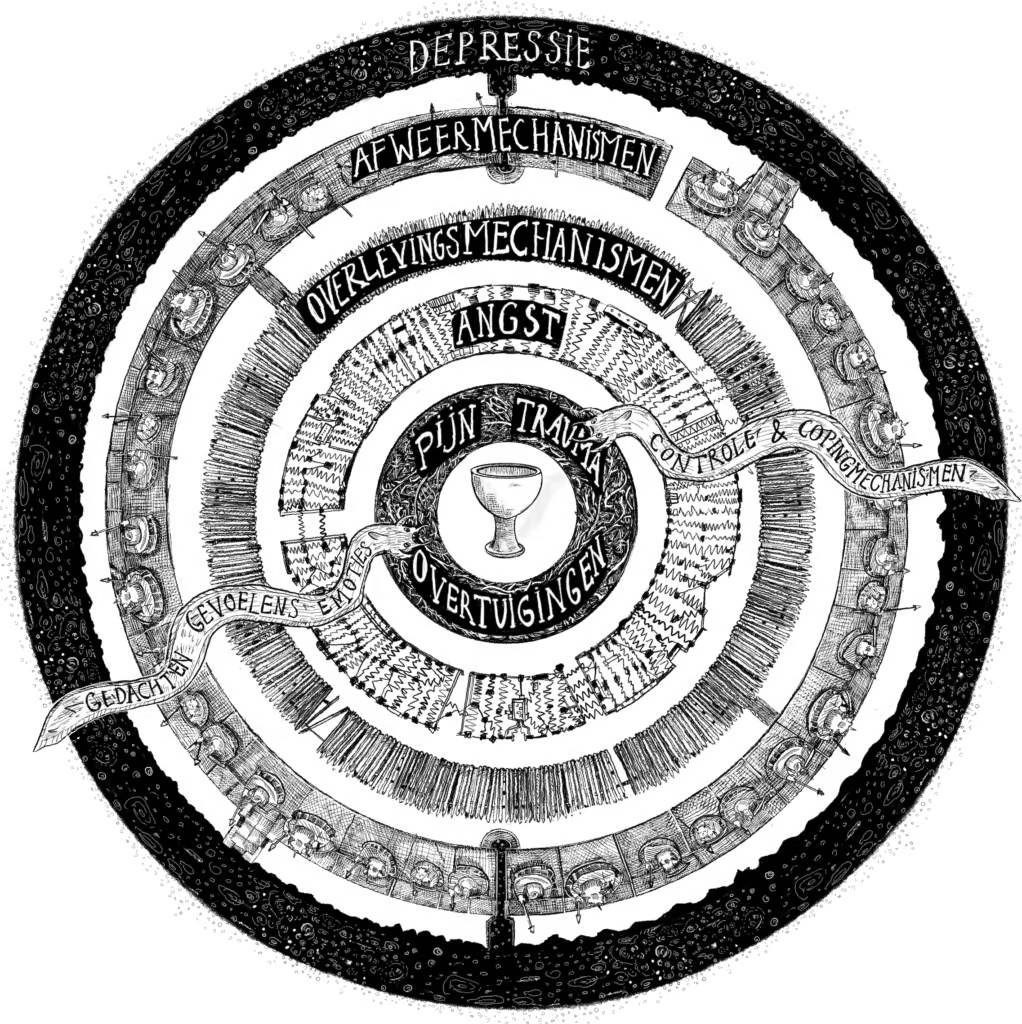
Even though we often don’t want to, we do it anyway: we go into survival mode.

→ Do your thoughts sometimes run away with you? → Do you want more peace of

→ Do you want to feel, but don’t know how? → Are you feeling all sorts

