Why do we have coping mechanisms?

“No one needs to tell me what I can and can’t do, and anyone who tries will hear it from me.” “I really can’t stand arguments—I just walk away.” “I’m a real people-pleaser; I like to make others happy.” “When someone is unkind, I freeze up.”
What is the significance of your coping mechanism?
“A survival mechanism is a response you use unconsciously and impulsively when faced with danger, in order to ensure your safety as quickly as possible.”
We all have coping mechanisms. Thank goodness! Because we need them when we’re in real danger. When we get scared—for example, because we’re about to get into a car accident or someone is hurting us—it’s really important to react immediately and instinctively to that danger. That’s what our survival mechanisms do for us.
What are our most common coping mechanisms?
But protecting our territory (our family, our faith, or our soccer team) or ensuring our survival when it is threatened are also survival mechanisms. This is how we survive quickly, with the least energy expenditure and the best results.
Survival mechanism in response to stress
But in a society where we work or study under constant pressure and stress all day long, where we no longer really understand how to form healthy relationships with ourselves or others, and where we’re constantly overstimulated by our screens, our system can no longer tell when there’s a real danger.
Just like acute danger, chronic background stress triggers the release of (nor)adrenaline and cortisol. Because of these two stress hormones, we are constantly in survival mode.
As a result, we react more quickly and with a short fuse, we escape into binge-watching a series or drinking alcohol, and we numb ourselves by no longer truly connecting with ourselves or others. So, on a massive scale, we’re just surviving instead of actually living.
Overcoming distractions
To be able to live fully in the present , it is first and foremost important that we have fewer stimuli to process: turn off your phone regularly, avoid sugar and alcohol, and reduce stress.
And secondly (or perhaps first?), it is essential that we process our pain. Because when we carry around unprocessed pain, we are constantly sending a signal to our brains: “There is danger, threat, and insecurity. Inside us. Do something.”
As a result, we try to please others, blindly obey rules and authority figures, fiercely assert our boundaries, or feel empty and lonely.
Safety
As we work to heal our old pain and fears, we gradually create a sense of safety for ourselves, allowing our nervous system and brain to be less on high alert and find balance.
As a result, we only speak when there is genuine danger; our survival mechanisms kick in instinctively, and we continue to live in connection with everything within us and with those we choose to connect with. Then we are not merely surviving—we are truly living.
Events from Discover Your Holy Grail
Does this article appeal to you? Be sure to check out the books by Discover Your Holy Grail. Are you curious about what we organize? Then sign up for one of our events. You can also check out our podcast for more inspiration. Episode 85 is about our coping mechanisms.
My name is Rianne van Kuil, author of *Discover Your Holy Grail – Your Journey from Trauma to Healing
, trauma and experiential expert, and podcast creator. I believe that complete healing from trauma is possible, and I guide people on that journey.
Photo credit: iStock
Other articles
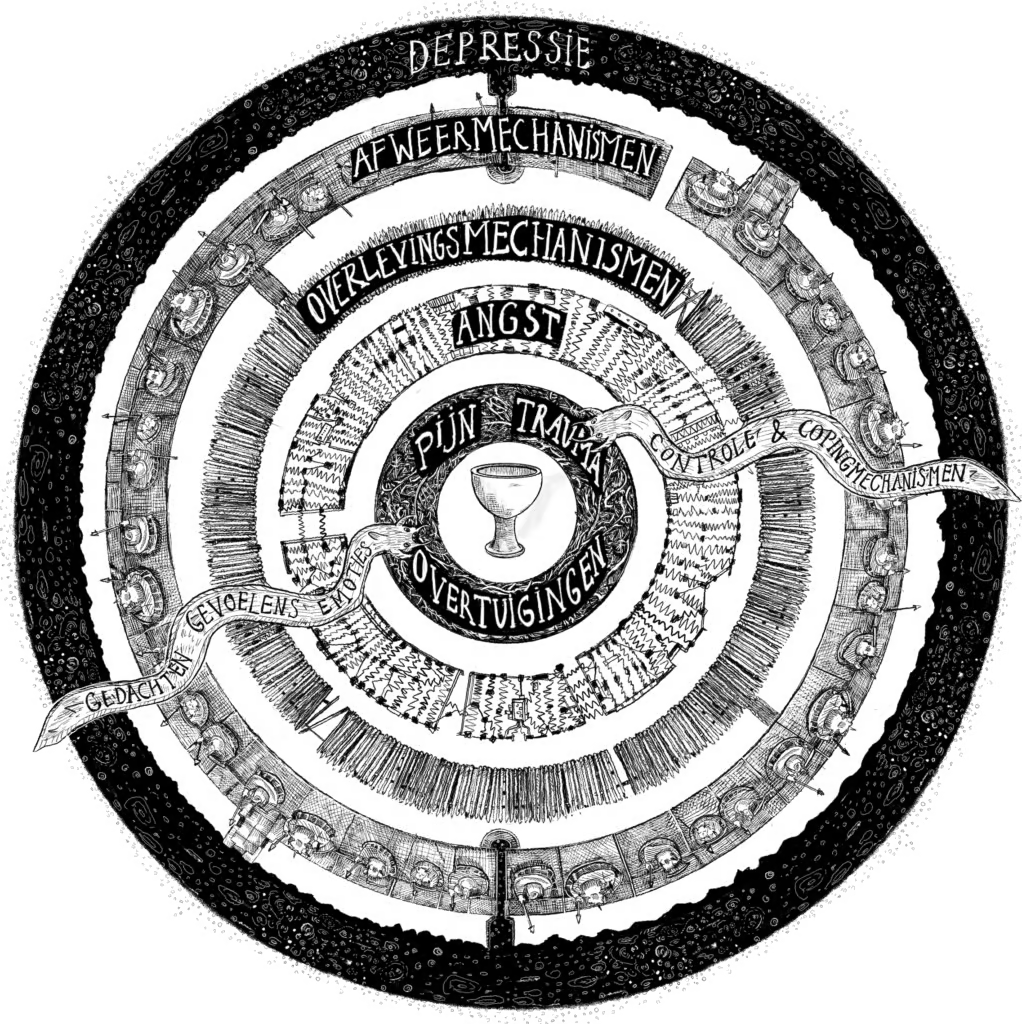
Even though we often don’t want to, we do it anyway: we go into survival mode.

→ Do your thoughts sometimes run away with you? → Do you want more peace of

→ Do you want to feel, but don’t know how? → Are you feeling all sorts

