How do you deal with resistance?

“Hi, this is Rianne. I’m looking for help. I think it’s for my addiction. I think I’m addicted to relationships… Oh, you can’t help me? But you do have another number. No, that’s not necessary. Or… never mind. Maybe I’ll call it sometime. Thanks.” That day, I’d mustered all my courage to call an addiction clinic. For the first time in my life, I lifted a corner of the veil of my misery for a stranger, only to let it fall back down again as soon as I realized I couldn’t go there. I had absolutely no intention of calling the new number. I couldn’t bear the thought of telling my story all over again. I felt intense RESISTANCE.
HOW DO YOU DEAL WITH RESISTANCE?
Until that day, resistance was the red stop sign I paid the most attention to. I’d turn around immediately whenever I came across it. Resistance made me feel restless, repulsed, afraid, unmotivated—it made me want to say NO.
Much later, I would learn that resistance is actually the signpost that leads you to your pain, fear, discomfort, or old wounds. To beliefs you’ve carried within you for a long time, to insecurity, and even trauma. Over time, I learned that resistance is something to move toward, time and time again. Why?
CHANGE AND FEAR
Resistance gives you an instant insight into what’s going on inside you—things that your survival mechanism stubbornly keeps hidden. It often points to two things: change or fear.
Change is sometimes desperately needed, but how we resist it! Afraid that the much-needed change won’t bring us what we’re looking for, we often cling to things that have long since become unhealthy for us: a job, a relationship, a home. We’re often so afraid of change that we’d rather hold on to what we know than let go and take the plunge.
IT DOESN’T ADD UP
We are also often afraid of rejection or loss—in other words, of pain. We’re afraid that someone will embarrass us, afraid of shame, afraid of failing, afraid that we don’t belong somewhere. Or we’re afraid of our emotions, our pain, or our beliefs. Because of this, we don’t want to dwell on all our uncomfortable feelings of restlessness or frustration, so we go out of our way to avoid them. NO WAY! NOT NOW! IT’S NOT CONVENIENT! We run away, fight, or numb ourselves: anything to avoid facing the pain and discomfort.
UNDERSTANDING WHAT RESISTANCE MEANS
Over time, I’ve learned that whenever resistance arose, I should move toward it. It always had something to tell me—often something very valuable. Above all, I learned that I could always handle my pain and that the necessary change always led to something positive.
A FEW TIPS:
To learn this, it’s important to examine your resistance:
- “Resistance, what are you trying to tell me?”
- What changes do I not want to make, and why not?
- What am I afraid of?
- Why don’t I feel like doing this?
- “What’s stopping me from moving in that direction?”
Try to sense the answer rather than think it through. Resistance is a feeling, so it must be explored and addressed with sensitivity.
That day, when I sought help, I finally decided to look past my resistance. I was terrified. But it turned out to be my salvation. The woman I spoke with on the phone the second time became an angel in my life. Thanks to her, my healing process began—a journey that would last over 10 years and during which I would encounter and question my resistance hundreds of times. Each time, it led to answers. Resistance became my teacher, my mentor. And I wish the same for you.
Does this article appeal to you? Be sure to check out the books by Discover Your Holy Grail. Are you curious about what we organize? Then sign up for one of our events. You might also want to check out our podcast for more inspiration. Episode 84 is about what resistance is trying to tell us.
My name is Rianne van Kuil, author of *Discover Your Holy Grail – Your Journey from Trauma to Healing
, trauma and experiential expert, and podcast creator. I believe that complete healing from trauma is possible, and I guide people on that journey.
Photo credit: iStock
Other articles
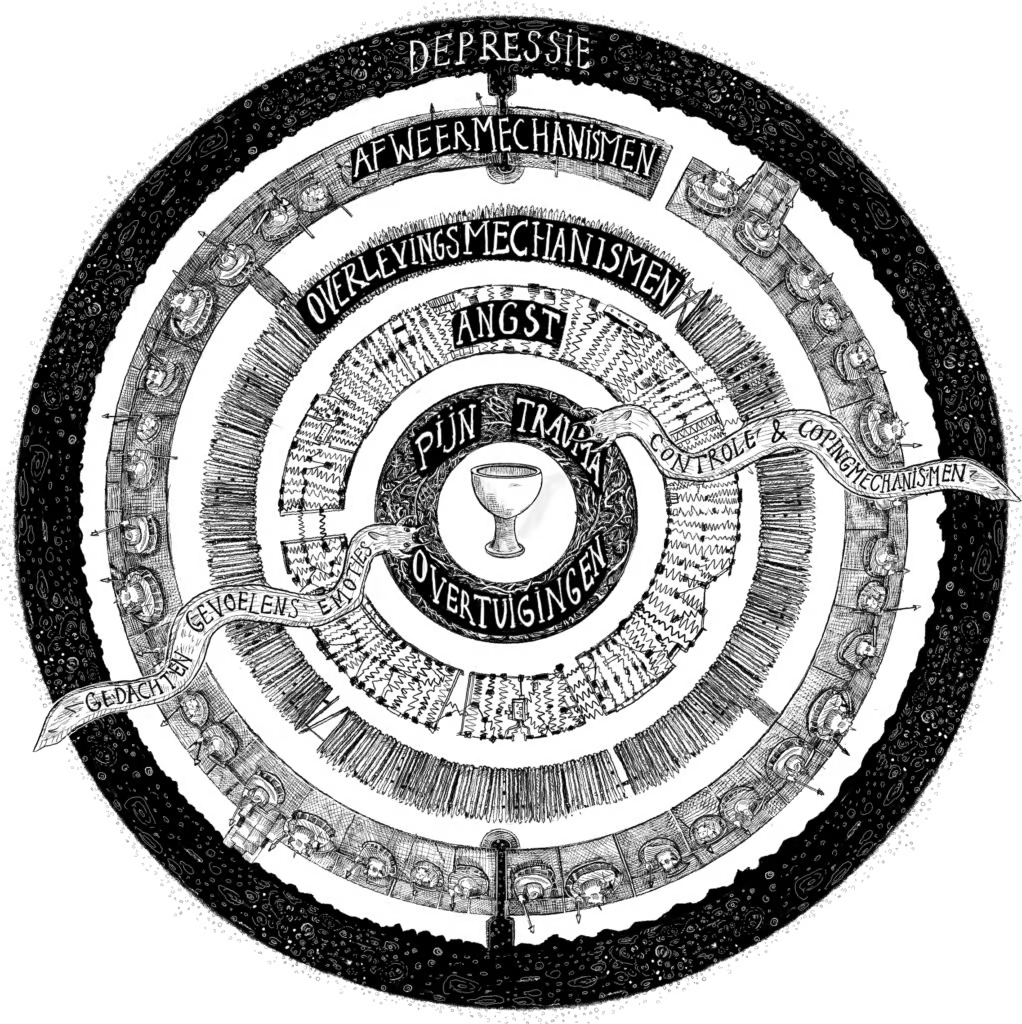
Even though we often don’t want to, we do it anyway: we go into survival mode.

→ Do your thoughts sometimes run away with you? → Do you want more peace of

→ Do you want to feel, but don’t know how? → Are you feeling all sorts

