How can you recognize the symptoms of trauma?

“Standing in line at the Appie behind someone who stinks really traumatizes me, you know, Dad!” I recently heard a father tell this story about his teenage daughter, and I couldn’t help but chuckle to myself. This Gen Z’er has a pretty good life, I thought.
WHAT IS TRAUMA?
Although we use the word “trauma” more readily these days than we did five years ago, it’s far from clear to everyone what it actually is—right, teenage daughter? 😉 Even professionals use a wide variety of definitions, which doesn’t make things any easier if you’re not yet familiar with trauma work. So let me start at the beginning: when we talk about trauma these days, we’re talking about psychological trauma, unless you work in healthcare. In that context, trauma refers to physical injury. When I speak of trauma, I always mean psychological trauma.
LONG-TERM INSECURITY OR IMPACT TRAUMA
When we talk about psychological trauma, what exactly is it?
“I see trauma as: the (unconscious) consequences of unresolved pain or feelings of insecurity that negatively affect your daily life and how you view yourself, others, and the world.”
There are two types of psychological trauma:
- An impact injury
- Long-term insecurity
And trauma can be caused by:
- People
- Nature
- Life (e.g., your body, work, etc.)
Let’s break it down. Unresolved pain or feelings of insecurity can stem from a single traumatic event: an accident, a natural disaster, or the loss of a loved one. They can also be shaped by prolonged insecurity. For example, by a persistent feeling of rejection, neglect, or being bullied. When people think of trauma, they often immediately think of that specific, impactful event. In my practice, I often hear: “But Rianne, I really haven’t experienced anything bad.” And while I certainly don’t want to convince anyone they have trauma, we’re often unaware that much of our trauma stems from prolonged insecurity. These are longer periods in our lives that were usually unsafe and… sometimes not. And that’s incredibly confusing, which is why we don’t recognize it as traumatic later in life. Because, when you’re being bullied, you sometimes also have fun days at school. So: is it really traumatic? And when your parents are unpredictable or emotionally absent, they’re also often kind and caring. So a traumatic childhood? Isn’t that way too strong a statement? Plus: as a child, your parents are your heroes, from whom you learn what “normal” life is. So the fact that they aren’t always there for you, don’t always provide emotional care, and don’t always see you for who you are doesn’t change the fact that your parents are “good people,” “did their best,” and you had a “good upbringing,” right?
PARENTS
In these examples of prolonged insecurity, parental figures play a significant role. And for good reason. Their presence or absence is crucial in the development or prevention of trauma. They should provide structural safety, healthy boundaries and autonomy, healthy emotional regulation, physical care, and unconditional love. When this is (regularly) lacking, as a child you often feel alone, unseen, or unacknowledged. Or you feel like an outsider and don’t really know what to do with your pain and worries. Trauma studies therefore show that trauma is not only caused by what was missing or what you received in excess, but primarily by whether you were left to cope alone or experienced support from parental figures.
TRAUMA SYMPTOMS
Later in life, you may recognize long-standing insecurity in ways such as always wanting to please others, taking on too much responsibility, struggling to break unhealthy habits or patterns, quickly getting into conflicts with yourself or others, or developing anxiety or other mental health issues. To name just a few symptoms of unresolved pain.
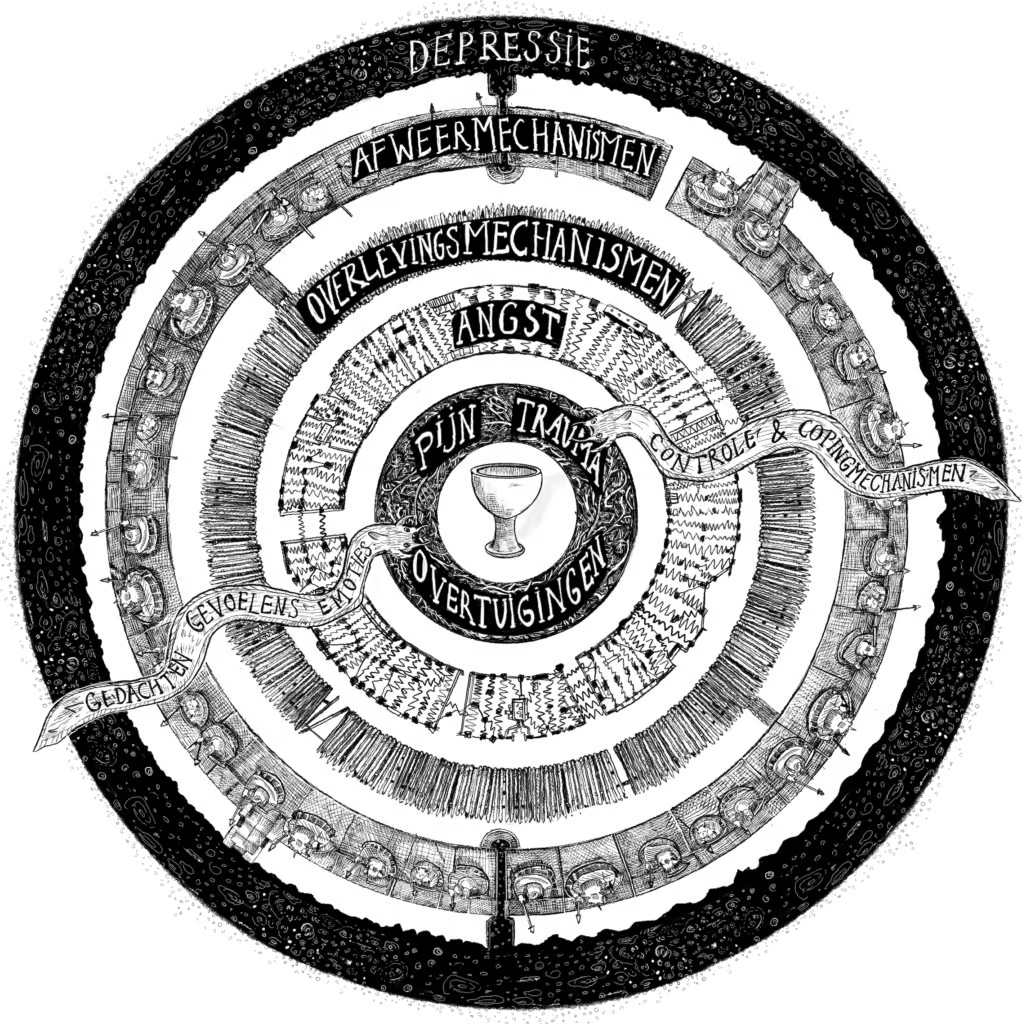
So you often don’t recognize trauma until much later in life, and usually through indirect evidence. And that’s quite complicated, because this evidence usually doesn’t point directly to unresolved pain or insecurity from the past. To see the connections between your unhealthy behavior, thoughts, and feelings in the present and what you experienced in the past, you often have to look at many different aspects of your life. Your attachment style, your survival or coping strategies, who provided you with a sense of safety and who didn’t, what else you’ve been through, and how your personality has developed. For many people going through this, it’s a massive puzzle. And for many therapists, it’s just as much of a challenge.
This puzzle has been a huge source of motivation for me to write Discover Your Holy Grail , create the podcast, and organize the events. Here, I aim to provide insight into how you can recognize the effects of past trauma in your daily life. And more importantly: I hope to teach you how to take steps on your own to heal old pain and ultimately let it go, so that the survival strategies are no longer necessary in the present and will fade away.
Are you curious to learn more? Then read Discover Your Holy Grail. You can also listen to our
podcast or sign up for one of our events, where you can learn, together with others, to dismantle your “
” survival system step by step, and in doing so, learn to heal yourself.
My name is Rianne van Kuil, author of *Discover Your Holy Grail – Your Journey from Trauma to
Healing, trauma and experiential expert, and podcast creator. I believe that complete healing from
trauma is possible, and I guide people on that journey.
Other articles
Even though we often don’t want to, we do it anyway: we go into survival mode.

→ Do your thoughts sometimes run away with you? → Do you want more peace of

→ Do you want to feel, but don’t know how? → Are you feeling all sorts

