Why do I get irritated so easily and overreact?

“You don’t have to tell me how to react!” “I don’t need your criticism.” “Don’t do that to me!” “Who do you think you are, anyway?” Who can relate to expressing their needs in a way that’s angry and irritated?
Strict boundary enforcement; quick to get angry and irritated
If we have experienced aggression, oppression, domination, abuse, or even more subtle forms of prolonged boundary violations in the past , our boundaries can become rigid.
We don’t want anyone to ever cross our borders again, so we fight our way through life, wearing a thick“ you-won’t-bring-me-down armor” to shield ourselves from new danger. We react quickly with irritation and anger, because we refuse to let ourselves be brought down.
FIGHTING
“When our boundaries are healthy, they are, just like a cell wall, somewhat permeable. You take in good and helpful information and filter out toxic information. It happens very naturally and effortlessly, and sometimes with a bit more firmness when the situation calls for it.”
When we focus too much on fiercely guarding our boundaries, we become hardened. We become fighters for our rights, our safety, our group, or our beliefs. You can see this hardening gaining ground all around us.
We shout on talk shows that the other side is wrong, blockading asylum centers and highways. We threaten media and political leaders online and twist facts and stories just to show how badly things are going in our country or even on the world stage.
On a smaller scale, you can see rigid boundaries when you’re unable to remain open and curious about someone else’s opinion or perspective. If you no longer tolerate criticism or feedback and regularly put yourself above others—thinking they’re wrong or haven’t learned as much as you have—then you don’t need to pay any attention to them, because you know better.
NO MORE PAIN OR IRRITATION
We do all this just to avoid letting anything in. To avoid feeling vulnerable, to avoid being open to a different perspective. We find this so stressful because it has often gone terribly wrong for us in the past. Because of the other person’s behavior, they have repeatedly or persistently crossed your boundaries. And you won’t let that happen again. So you’ll fight back. Anything is better than feeling that oppression, that powerlessness, and that pain all over again.
REESTABLISHING BORDERS
There is another way to stop feeling this pain. The gentle path of restoring your boundaries. The path of turning inward, facing your old wounds, and restoring your healthy boundaries step by step.
You can’t do this alone. You’ll need help at the start of this process. At Discover Your Holy Grail , we’re happy to offer that help, for example through our online training: How Do I (Re)Establish Healthy Boundaries? In this course, I’ll guide you through 13 lessons, helping you move from rigid to healthy boundaries.
On our website, you’ll find many more tools to help you heal from boundary violations. And feel free to email us anytime if you have questions or want to discuss what best fits your healing journey.
HERE ARE A FEW TIPS:
- Set your boundaries early on.
- If you speak calmly, the other person will understand you better.
- Be curious about what the other person means or wants to say.
Does this article appeal to you? Then sign up for the online training: How do I (re)establish healthy boundaries? Also check out the books by Discover Your Holy Grail. Are you curious about what we have to offer? Then sign up for one of our events. You might also want to check out our podcast for more inspiration.
My name is Rianne van Kuil, author of Discover Your Holy Grail – Your Hero’s Journey from Trauma to Healing, and a trauma and healing expert. I believe that complete healing from trauma is possible, and I guide people on that journey.
Photo: iStock-johnaudrey
Other articles
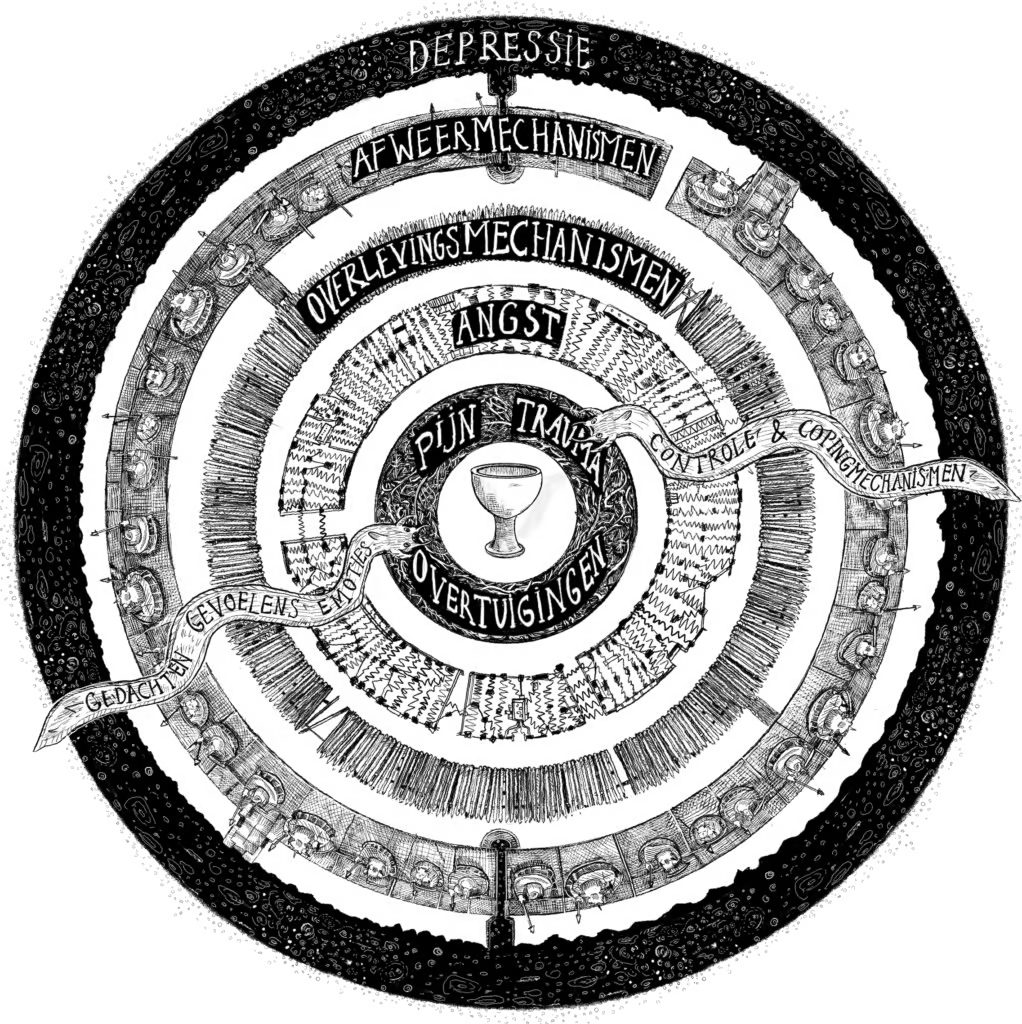
Even though we often don’t want to, we do it anyway: we go into survival mode.

→ Do your thoughts sometimes run away with you? → Do you want more peace of

→ Do you want to feel, but don’t know how? → Are you feeling all sorts

